
Test Platforms
A family of instrument racks for automated test — from a bench unit running a single functional test to a full in-line handler. Configured around your product, built and supported by the engineers who design test systems for a living.
- Range
- Three 19" rack sizes — 1000, 3000, 5000 — all CE approved
- Instrumentation
- NI PXI, CompactDAQ and Keysight, configured per project
- Software
- LabVIEW and TestStand, or your existing test executive
- Signalling
- DC to GHz, mV to kV
- Delivered with
- Connector bay, test program, documentation and acceptance run
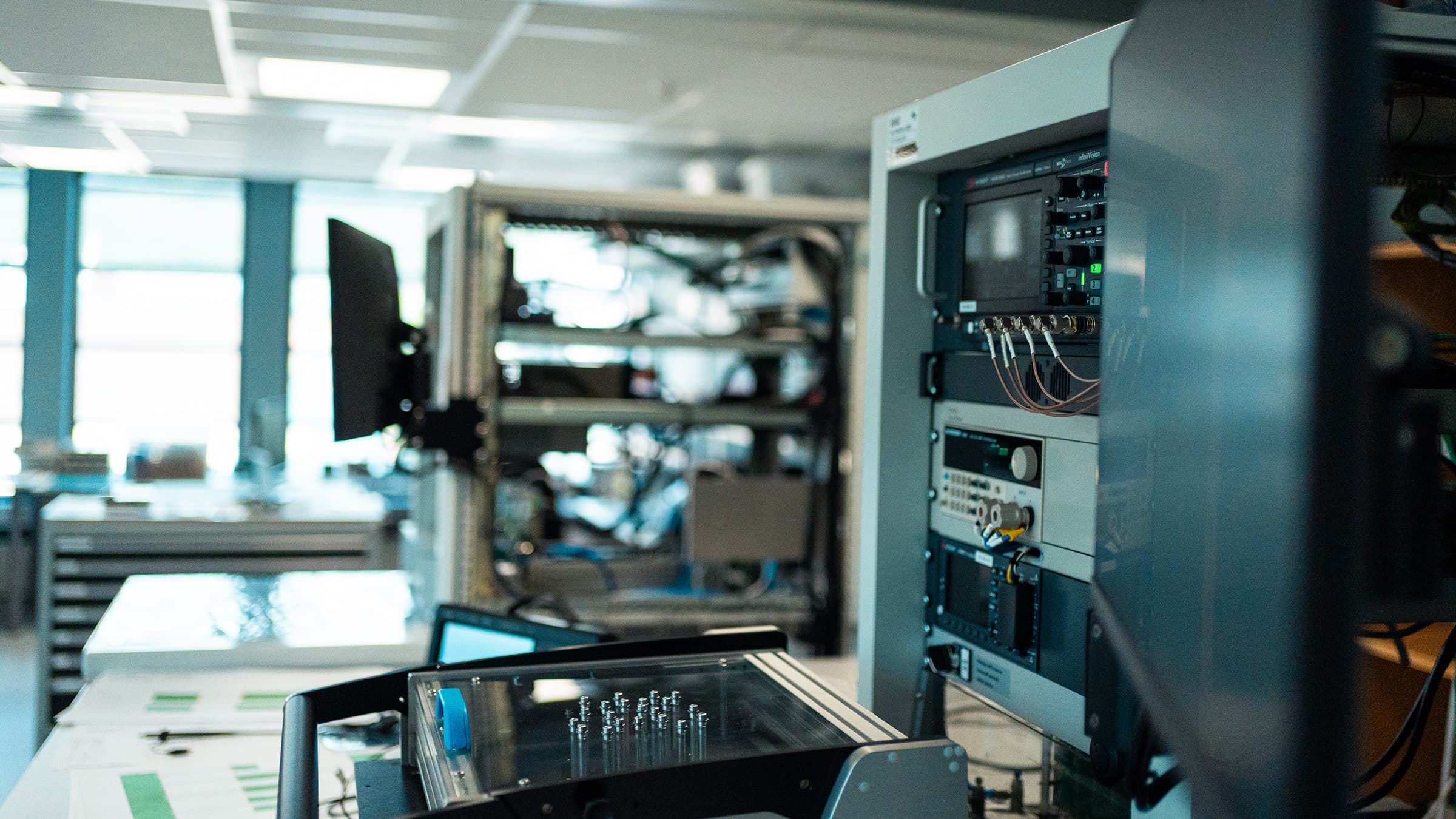
The range
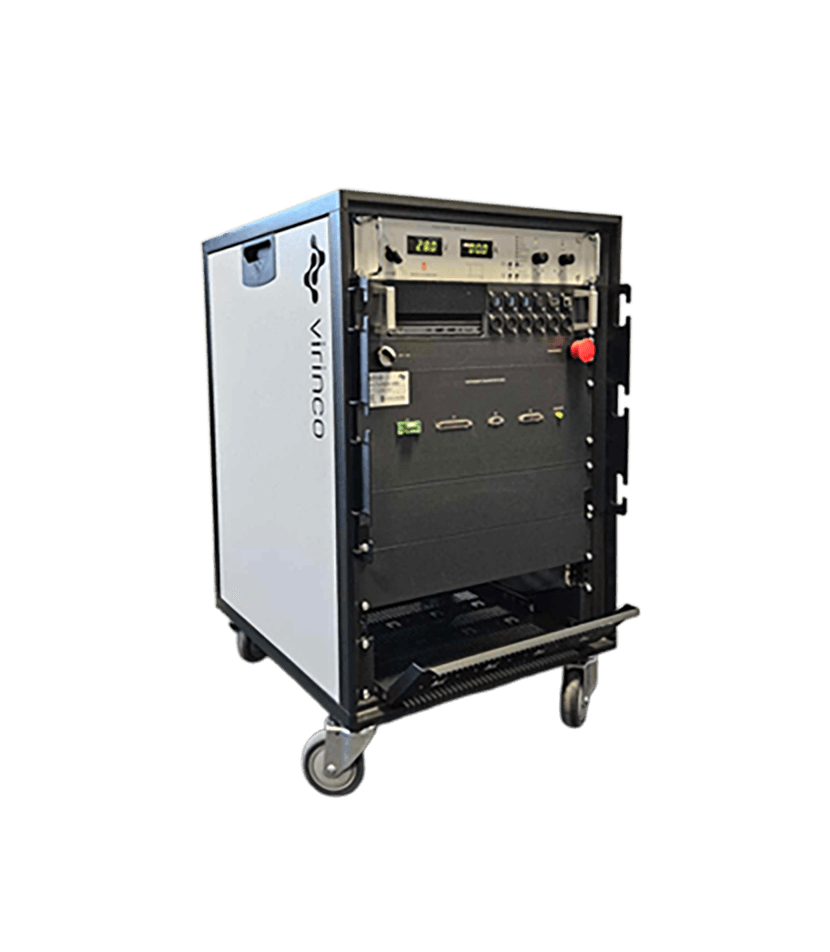
Test Platform 1000
The smallest rack in the range — benchtop or under-table, built around a single USB-DAQ instrument set.
- Rack height
- 800mm
- Rack depth
- 600mm
- Computer inside system
- Optional
- Total units
- 11U — 11U free for instruments
- DAQ system
- USB-DAQ
- Automatic connector bay
- Not available
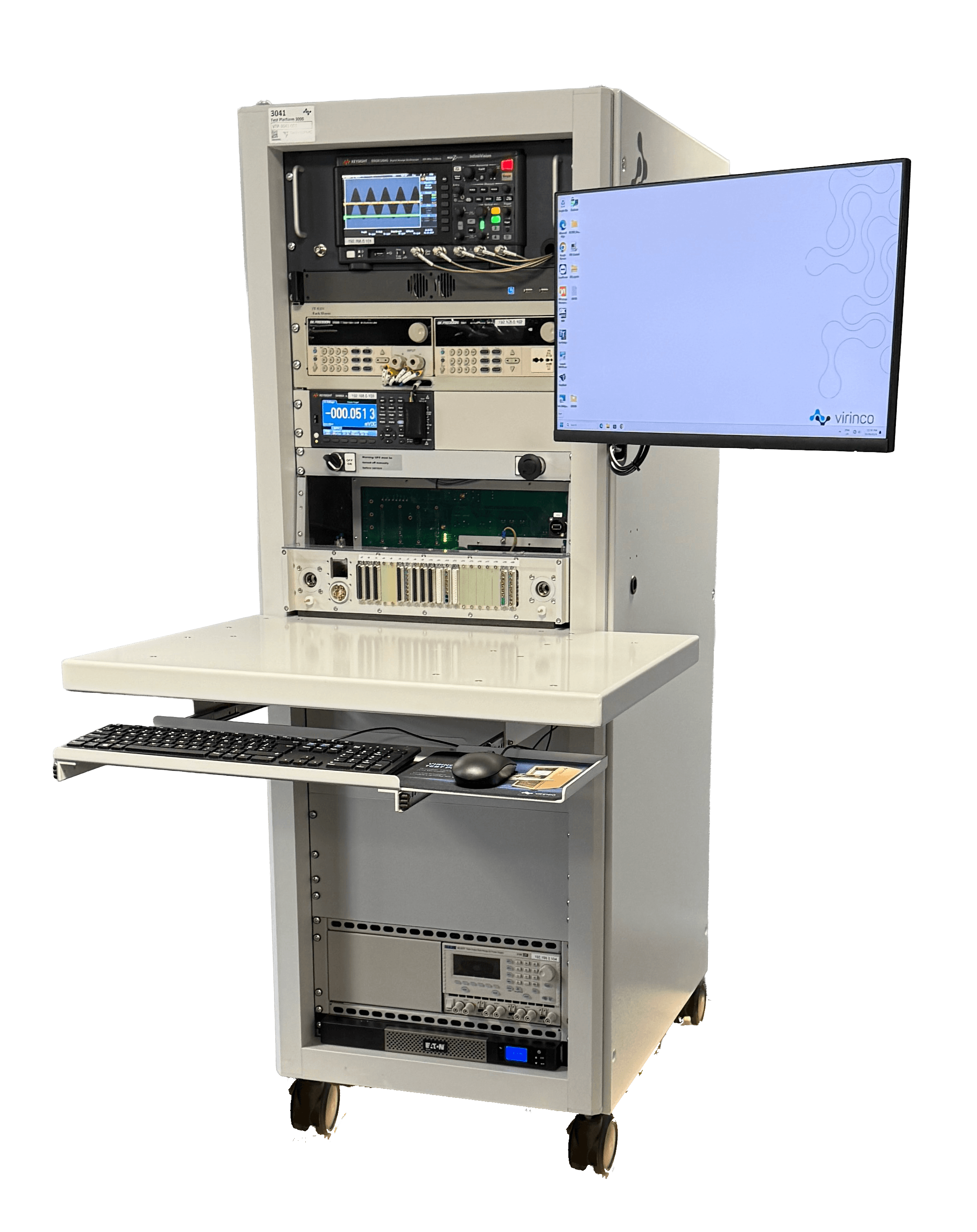
Test Platform 3000
The mid-size rack — floor-standing, with a computer built in as standard and room for a full instrument set.
- Rack height
- 1800mm
- Rack depth
- 800mm
- Computer inside system
- Standard
- Total units
- 33U — 18U free for instruments
- DAQ system
- USB-DAQ / PXI
- Automatic connector bay
- Standard
Test Platform 5000
The largest rack in the range — the same reliability and flexibility, with the most space for instruments.
- Rack height
- 2200mm
- Rack depth
- 800mm
- Computer inside system
- Standard
- Total units
- 42U — 26U free for instruments
- DAQ system
- PXI
- Automatic connector bay
- Standard
Key features
Low initial cost
A standard chassis and a proven build means you pay for instrumentation, not for engineering the box.
Smart build-up
Racks are assembled from a known set of modules, so lead time is short and a second unit is identical to the first.
Reliable connector bay
The interface that gets touched ten thousand times is the one we over-engineer. Serviceable without opening the rack.
Flexible instrument configuration
Instruments are selected per project and can be changed later — the platform does not lock you to one product generation.
Low to high-speed testing
DC through GHz, mV to kV, in the same rack.
Software flexible
Ships with LabVIEW and TestStand, and integrates with an existing test executive where you already run one.
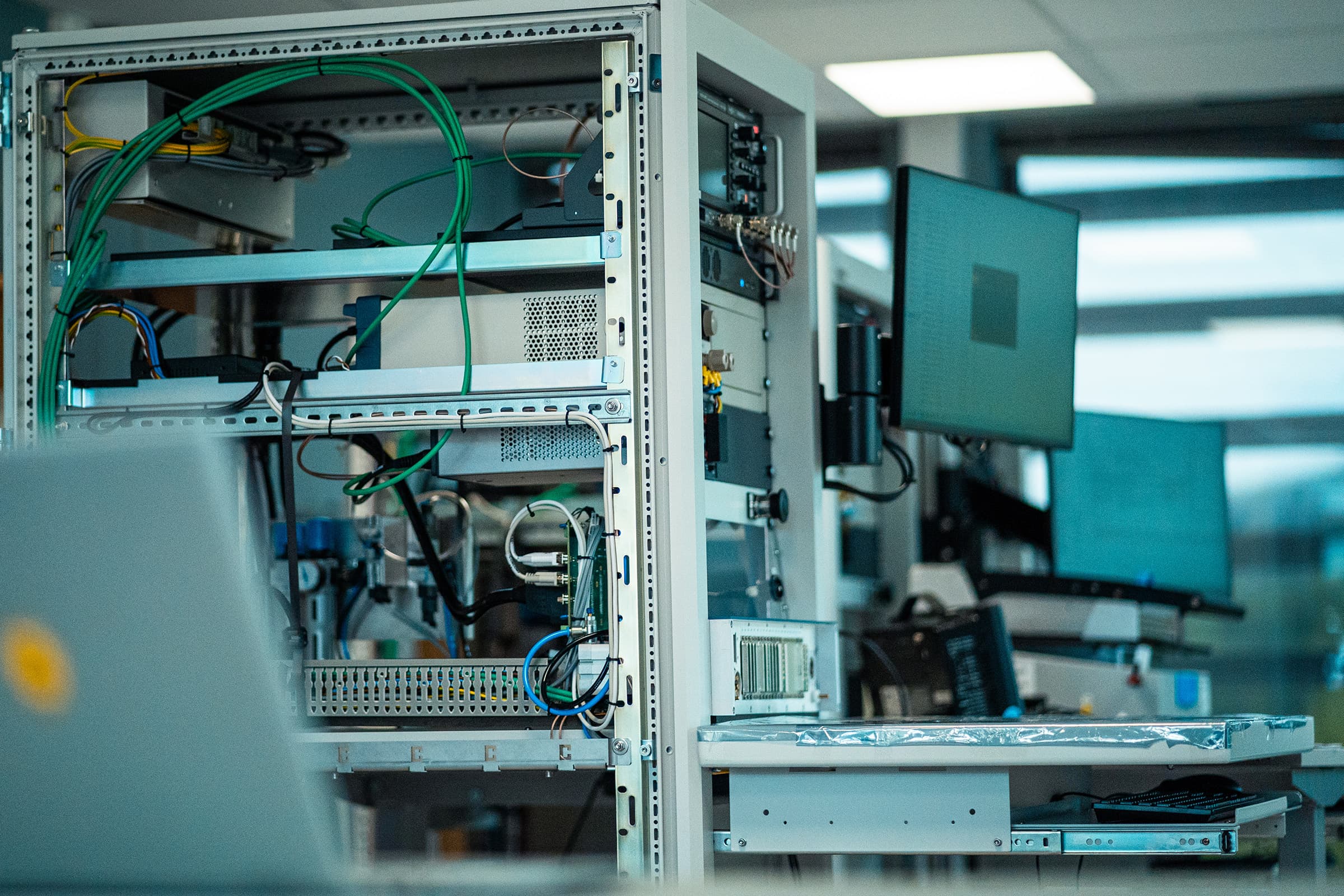
What is inside a platform?
A chassis, a power and safety layer, an instrument bay, a connector bay and the software that ties them together. The parts that are the same on every project are standard; the parts that touch your product are designed for it.
That split is the whole point. You get the lead time and price of a standard product where it does not matter, and bespoke engineering exactly where it does.
Questions we get asked
What is the difference between a test platform and a test fixture?
The platform is the rack: instrumentation, power, control software and operator interface. The fixture is the mechanical interface that holds your product and connects it to the platform. One platform normally serves many fixtures — one per product variant.
Can we buy a platform without a test program?
Yes. Test platforms can be supplied as part of a complete test solution or adapted to the requirements of the application.
Can it run our existing LabVIEW or TestStand code?
Yes. Both are the platform default, and existing sequences usually port with limited rework.
What lead time should we plan for?
Lead time depends on configuration and scope. We confirm the delivery schedule once the required instrumentation and application requirements are defined.
Who services it?
You do, for day-to-day work — that is why the connector bay is serviceable from the front. We provide documentation, spares guidance and a support agreement for the rest.
Production Test Systems
Test strategy, program and traceability — the service around the hardware.
Read more →