
A practical guide to industrialization
Industrialization is the work that turns a design that functions into a product that can be manufactured reliably and repeatably, at the volumes a business actually needs. Done well, it starts long before the first production run, and it never fully stops.
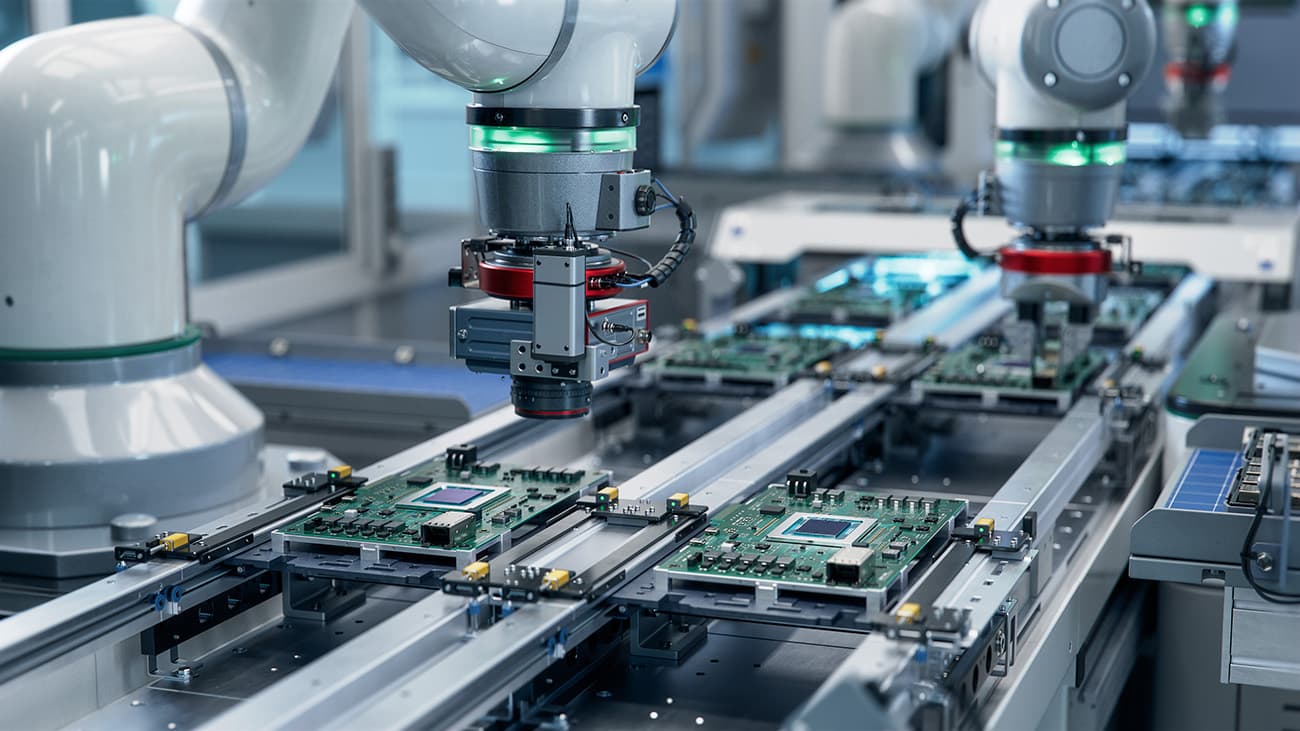
A working prototype proves an idea works on the bench. It rarely proves it can be built the same way a thousand times, by different operators, on different days. Closing that gap is what industrialization does. It touches manufacturability, testability, production processes, documentation and quality. The earlier it starts, the less it costs. A design choice that takes an hour to change on paper can take weeks once tooling exists.
Virinco structures this as a cycle of six stages, not a single gate at the end of development. Production itself feeds the next cycle. Yield, failure modes and floor feedback flow back into Plan, so the next revision starts smarter than the last. This guide walks through each stage, what to look out for, and a checklist to work from.

Plan → Analyze → Specify → Develop → Ready for Production → Produce, and Produce feeds back into Plan. Each cycle brings data and experience that shapes the next.
Plan
Set the production strategy and the constraints the rest of the process will work within.
Planning decides the shape of production before a single part exists. Get it wrong here, and every later stage inherits the problem.
Production strategy and requirements
Target volumes, make-or-buy decisions, product variants, cost and lifetime targets, and regulatory or qualification requirements all belong on paper early. They decide which components and test approaches are even viable. Defence, space, energy and maritime work each carry their own requirements here. An early risk register, covering long-lead and single-source parts, unproven processes and tight tolerance stacks, turns individual worries into a shared, visible list.
Bring manufacturing and test in early
The teams who will build and test the product should see it while it is still a concept. Their questions are practical: how would we fixture this, and how would we test it without physical access to that pin? These questions are cheap to answer now, but expensive to address once tooling is cut.
Plan asks: What are we building, in what volume, and where? What already looks risky?
Analyze
Pressure-test the design against how it will actually be built and tested.
Analysis asks whether a design, even an early one, will work in a real production and test environment.
Manufacturability and testability
A design-for-manufacture review checks component placement, panelization, solder joint access, thermal profile and assembly sequence. Hand operations that will not scale usually show up here first. Design for test asks the parallel question: can every test point actually be reached by a fixture, and can boundary-scan or built-in self-test be used rather than bolted on later? A board that is hard to test manually is usually expensive to test automatically too, so testability problems tend to show up twice.
Component and supply chain risk
This is also the point to weigh the bill of materials for obsolescence, single-source dependencies and long lead times against the production strategy set in Plan. A component that is perfect electrically but has a fourteen-month lead time is a production risk, not a procurement inconvenience.
Analyze asks: Can this be built repeatably? Can every function be verified after assembly?
Specify
Turn analysis into concrete, written requirements for production and test.
Specify turns findings into documents other people can build against without guessing.
Process and test strategy
This covers the assembly process itself (manual, semi-automated or automated), its process parameters and sequence, so the result does not depend on which operator or shift runs it. Test strategy follows, and belongs here rather than after production starts. It covers which tests happen in-circuit, functionally or at final inspection, what coverage the design's access actually allows, and what pass/fail criteria mean in engineering terms.
Fixtures and documentation
Custom fixtures and test equipment usually sit on the critical path to a production start date, so specifying connector types, test points and mechanical interfaces early gives fixture design a running start. Assembly drawings, work instructions, inspection criteria and quality records need an owner and a format now, not during the first pilot build.
Specify asks: Exactly how will this be built and verified, and what does that require, from whom?
None of this starts at Plan, either. The same narrowing happens further upstream, from early market thinking down to a single, production-ready path:
Industrialization starts before production. Decisions made during concept development and NPI determine how efficiently a product can move into repeatable production and volume.
Develop
Build the fixtures, test programs, processes and documentation the specification called for.
Develop is the execution stage, usually running in parallel with the last rounds of design refinement.
Design changes and test capability
Findings from Analyze often turn into real design changes here: adjusted footprints, relocated test points, simplified assembly. A small number of engineering changes at this stage is normal and healthy. In parallel, test programs get written and fixtures get built and debugged together against early-production units. This is where a test strategy either proves workable or reveals a gap.
Processes, instructions and verification
Assembly processes get trialled and work instructions get written in the form operators will actually use, not the form that was convenient to write. Everything developed here, including coverage, process capability and documentation, gets verified against the requirements set in Specify before it is trusted with real volume.
Develop asks: Do the fixtures and instructions actually work on the floor, and are we verifying against what we specified or what was convenient?
Ready for Production
Prove the whole process at small scale before committing to volume.
“It worked once” and “it works reliably” are different claims. This stage is where the difference gets tested.
Pilot production and readiness review
A pilot build is the closest thing to a dress rehearsal: a limited run using the intended process, tooling, fixtures and documentation. It surfaces the problems that only appear when everything runs together, such as a work instruction that confuses a new operator or a fixture that drifts after the first ten units. A structured readiness review then checks documentation, test coverage, process capability and open issues. That turns “we think we're ready” into a defensible decision involving manufacturing, quality and often the customer.
Yield and training
First-pass yield and defect data from the pilot are the earliest reliable signal of how production will actually perform. They are worth chasing down now, since a systemic issue is far cheaper to fix before volume than three thousand units in. Operators, technicians and quality staff need to actually know the process before it is fully theirs, not just have access to the documentation.
Ready for Production asks: Has the process been run start to finish at small scale, and is yield where it needs to be before volume makes problems expensive?
Produce
Run production, and treat what it produces (including data) as an input, not just an output.
Produce is where everything the previous five stages put in place gets used at volume, and where real production data starts to accumulate.
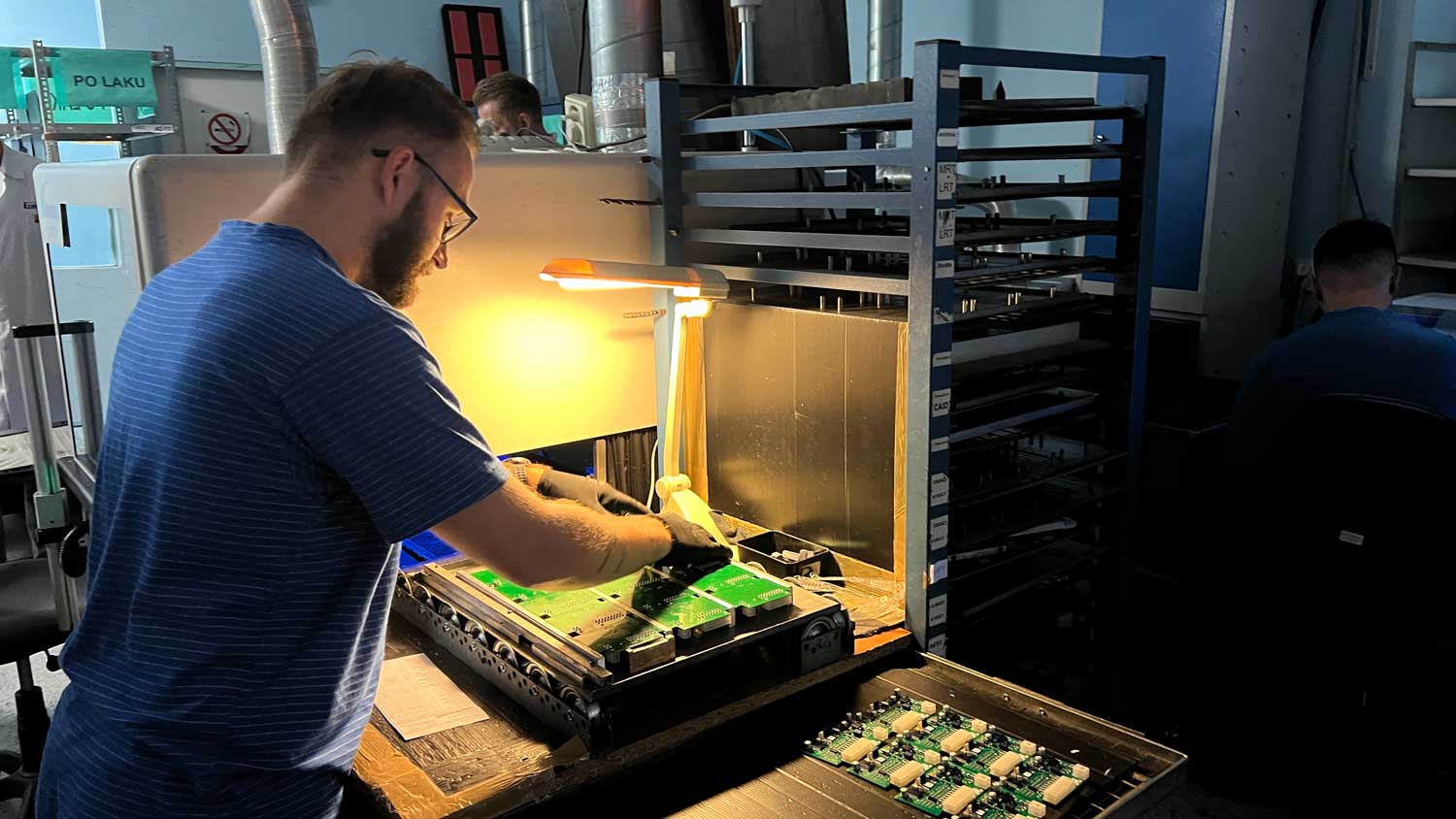
Electronics production in practice.
Production test and yield
Production test (in-circuit, functional, final inspection, depending on what Specify and Develop put in place) turns “we built it” into “we know it works,” catching problems before they leave the building without becoming a bottleneck. Yield, defect rates and failure modes should be tracked continuously, rather than glanced at when something goes visibly wrong. A slow drift is often the first sign of a component, process or supplier issue, and it is far easier to catch as a trend than as a crisis.
Data and continuous improvement
Every unit through test produces data: pass/fail results, parametric measurements, cycle times, repair history. That data flags emerging problems early and justifies process and design changes with evidence instead of opinion. This is also where the cycle closes. Failure modes inform the next revision's risk register, bottlenecks inform the next product's production strategy, and a test escape (a fault that reached a customer) informs test coverage and the assumptions built into the next Specify stage. None of it happens automatically. It happens when production data has a route back to the people planning what comes next.
Produce asks: Is test catching what it should, is yield stable, and where is this cycle's data changing the next one?
Industrialization checklist
A concise, practical list to work through across a project. Not every item applies to every product.
Before you start
Volumes, target cost and key requirements (regulatory, qualification) are written down and agreed
Manufacturing and test partners or teams are involved from the start
An initial risk register exists and has an owner
Through design and development
DFM and DFT reviews are done, not just assumed
Test points are physically accessible by a real fixture, not just electrically present
Single-source and long-lead components are flagged and designed around where possible
Test strategy and fixtures are specified early enough to be ready on time
Before scaling production
A pilot build has run using the real process, tooling and documentation
First-pass yield has been reviewed against expectations
A production readiness review is complete, with open issues tracked to closure
Operators and technicians are trained, not just handed documents
Where Virinco Technology's Industrialization service fits in
Virinco Technology supports customers throughout the industrialization process, from early design reviews and production strategy to test development, custom fixtures, pilot builds and production ramp-up. We can join at an early concept stage or address a specific challenge where additional engineering expertise is needed.